Why 70% of AI Projects Fail Not Because of Technology, But Because of Poor Governance
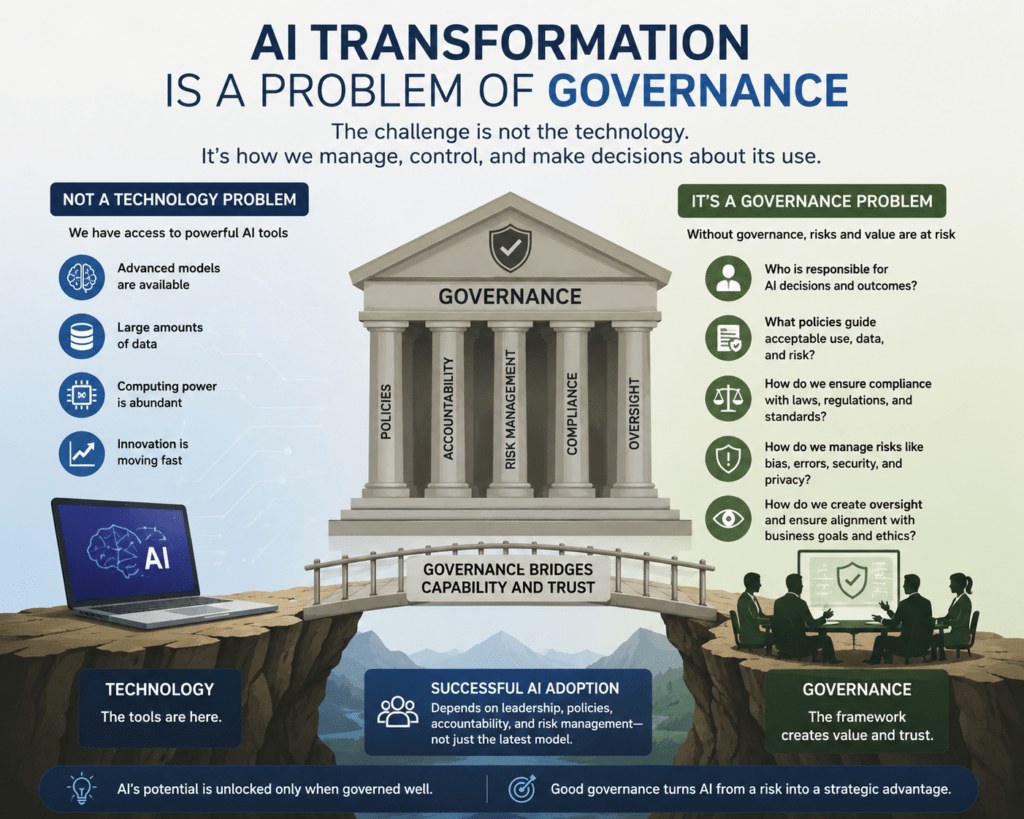
AI transformation is a problem of governance” means that the biggest challenge in adopting AI is often not the technology itself, but how an organization manages, controls, and makes decisions about its use.
Table of Contents
What Does “AI Transformation Is a Problem of Governance” Mean?
The shift to using AI is really more about how we govern it than the technology itself. The biggest hurdle organizations face isn’t necessarily in the tech but in figuring out how to manage, control, and make decisions about it effectively. It’s all about making sure AI is used responsibly and beneficially within the company.
AI transformation represents a fundamental shift in how organizations operate with AI tools like ChatGPT, reimagining team dynamics rather than merely enhancing efficiency. Without proper governance, this transformation can become disorganized, leading to misaligned goals, perpetual pilot projects, and ambiguous accountability.
The Shocking Reality: 70% Failure Rate
The evidence is evident: without contemporary, proactive management, most AI projects are unlikely to generate value. It’s not the absence of intention or IT funding that hinders organizations, it’s the inadequate data and governance practices that affect quality and erode trust.
Why AI Transformation Becomes a Governance Problem
AI transformation becomes a governance problem when companies rapidly adopt AI without clear ownership, accountability, or decision-making rules. Here’s what happens:
Common Governance Challenges:
- Lack of Standardized Regulatory Frameworks: AI deployment occurs in a fragmented regulatory landscape
- Ethical Concerns: Algorithmic bias, opaque decision-making, and fairness issues
- Unclear Ownership & Accountability: No one knows who’s responsible for AI decisions
- Data Management Gaps: Siloed teams, legacy tools, and reactive strategies
- Rapidly Changing Regulatory Landscape: EU AI Act and other regulations evolving constantly
AI introduces complex risks, yet governance is often introduced too late — or not at all.
What is AI Governance?
AI governance encompasses the thoughtful decisions, roles, controls, and evidence that ensure your AI aligns with strategic goals, is safe for its purpose, and remains effectively monitored post-deployment.
Think of it as the rulebook for using AI without courting chaos:
- Policies on which vendors/tools are approved
- Responsible AI use guidelines
- Privacy laws compliance
- Documenting AI decisions
- Keeping AI use in check
The 5-Step Framework Executives Use to Scale AI Responsibly
According to the 2026 framework designed by well known industrial people, successful AI transformation requires:
- Establish Strong Principles & Guardrails: Define ethical boundaries upfront
- Embed AI into Existing Compliance Frameworks: Don’t create separate systems
- Create Clear Ownership & Accountability: Assign responsible parties
- Implement Proactive Data Governance: Modern, not reactive approaches
- Monitor After Deployment: Continuous oversight, not one-time checks
What Companies Need to Do Now
Organizations need to understand that AI transformation is not just about using new technology; it’s also about good governance. This requires strong policies and ethical guidelines. While advanced technologies may seem exciting, the most important part is building systems that ensure AI is used responsibly and fairly. By focusing on governance, organizations can manage the challenges that come with AI, build trust, and stay accountable. This helps ensure that their AI efforts align with the values of society, leading to a successful and responsible integration of AI.
Action Steps:
- Recognize the most common AI governance challenges upfront
- Establish accountability structures that drive scalable AI
- Move beyond simply managing technology to actively shaping its trajectory
- Require robust policy and ethical guardrails for enterprise AI
- Ensure structure, accountability, and oversight drive AI success
The path forward is to recognize challenges, establish guardrails, and embed AI into existing compliance frameworks.
This article was thoroughly researched using 2026 data sources regarding AI transformation is a problem of governance and includes the latest statistics on AI project failure rates and governance frameworks.